Dr. Gymbro
←

#countermovement jump

2 articles
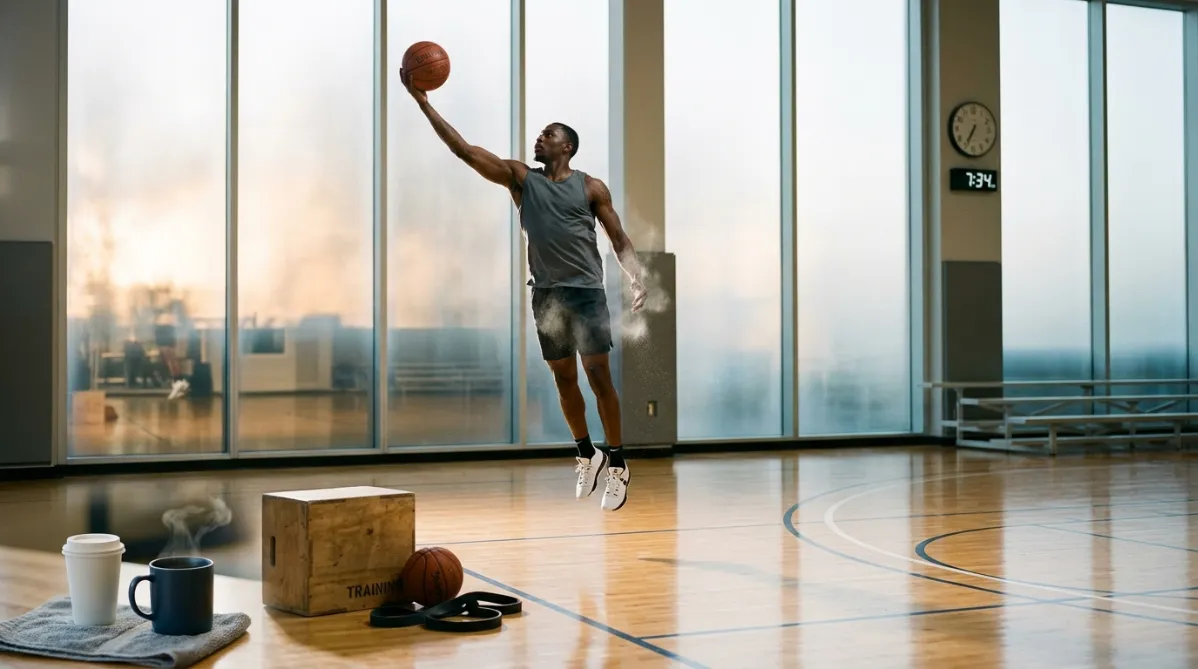
A wide, editorial-style photograph of a basketball player mid-air at the top of a vertical jump inside a sunlit indoor court, shot from a low angle so the athlete's silhouette rises against tall frosted windows glowing with soft morning light. The player wears a plain charcoal tank and white sneakers, with chalk dust drifting off their hands and catching the light. The polished honey-toned hardwood floor reflects the figure faintly, with crisp painted court lines leading the eye across the frame.

In the foreground at the lower left, slightly out of focus, a small wooden plyometric box sits on the floor beside a matte ceramic cup of black coffee and a plain white paper cup, placed neatly on a folded gray towel. Thin steam curls from the ceramic cup. They stand for the question of caffeine versus warm-up without any text or labels.

The color palette is calm and modern: warm amber wood, soft cream, muted slate blue shadows, and a touch of burnt orange from a basketball resting near the box. Light is natural and diffused, with gentle rim lighting on the athlete's shoulders and a shallow depth of field that blurs the background bleachers into creamy shapes. The composition has generous negative space on the right third, suited to a headline overlay, in a clean, contemporary magazine style with fine film grain, subtle contrast, and a quiet, focused mood. No text, no logos, no futuristic elements.
science research

La caféine avant les sauts n’a rien apporté de plus : l’échauffement a fait le travail

BY DR. GYMBRO ·

La combinaison caféine et échauffement en drop‑jump semblait promettre des sauts plus hauts, mais une étude récente menée chez des basketteurs d’élite a montré qu’elle n’apporte aucun bénéfice supplémentaire. La routine de drop‑jump personnalisée a, quant à elle, généré un gain de hauteur net mais éphémère. Une dose de 3 mg/kg de caféine n’a modifié ni la hauteur maximale, ni le timing, ni le PAPE global par rapport au placebo. Les réponses individuelles ont très varié, ce qui laisse la possibilité que certains athlètes réagissent différemment.
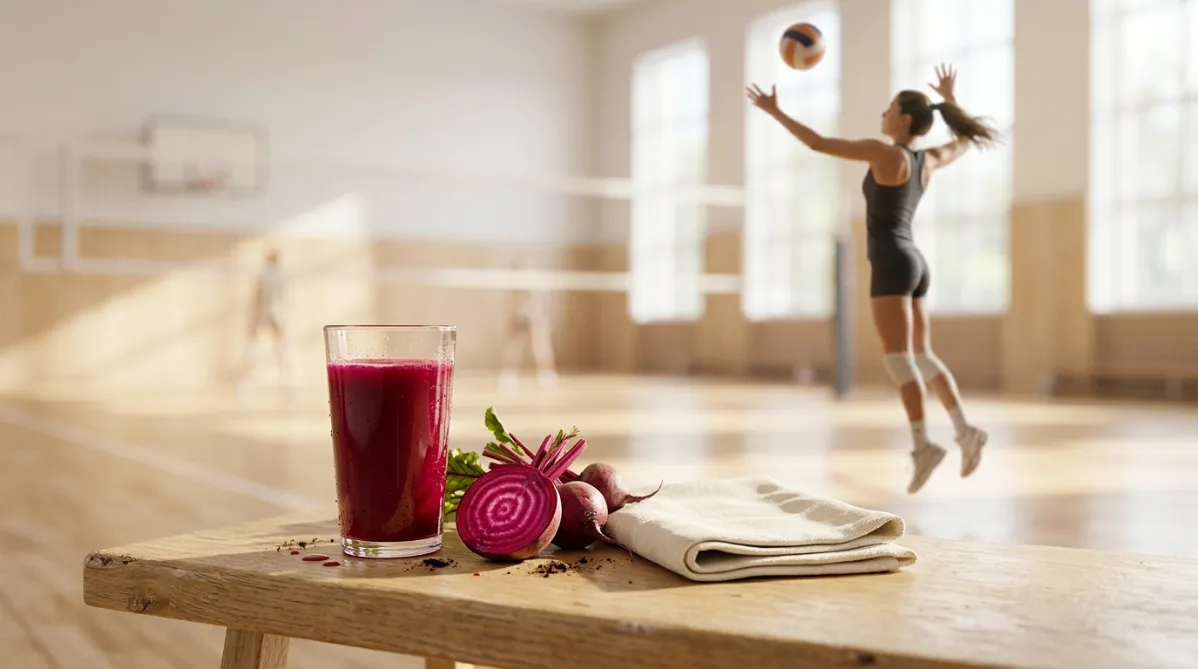
A wide, editorial-style photograph of a deep magenta glass of beetroot juice standing on a pale oak gym bench in soft morning light. Beside it sit a halved raw beetroot with vivid fuchsia and white concentric rings, a few whole beets with leafy stems, and a folded cream towel. Behind them, slightly out of focus, a female volleyball player in a fitted charcoal athletic set is caught mid-jump on an indoor court. Her arms are raised, her ponytail lifts, and a volleyball hangs near her fingertips. The polished wooden court floor reflects warm light from tall windows. The background fades into a creamy blur of pale wood tones, soft white walls, and hints of a net.

The composition follows a rule-of-thirds layout. The juice and beets fill the lower left third in crisp focus, and the jumping athlete is the softly blurred focal point on the right. Fine condensation beads on the glass, and a few juice droplets rest on the bench like small jewels. The palette is limited and modern: rich beet magenta, warm honey wood, soft off-white, and charcoal accents. The light is natural and diffused with gentle long shadows. The shallow depth of field suggests a high-end lifestyle and health magazine. The look is clean and minimal with plenty of negative space in the upper left for a title overlay. The mood is energetic yet calm, hinting at recovery and bounce. It has fine film-like texture and true-to-life color, with no text, logos, or futuristic elements.
nutrition

Jus de betterave et hauteur de saut : le jour 3 rend‑il le rebond ?

BY DR. GYMBRO ·

Deux cents sauts chargés laissent les jambes en compote, mais le jus de betterave pourrait‑il rendre le rebond au troisième jour ? Une nouvelle étude croisée menée chez des joueuses de volley‑ball montre une hauteur de saut accrue à 72 h et un meilleur seuil de douleur du mollet sous l’effet du jus de betterave. En revanche, la douleur, l’agilité, le gonflement et la plupart des mesures de force restent inchangés, l’interaction globale sur le saut n’étant qu’une tendance. Cet article décortique les résultats, leurs applications possibles pour les athlètes et les limites d’un petit échantillon exclusivement féminin.

This page is available in